Tensile Fabric Structures
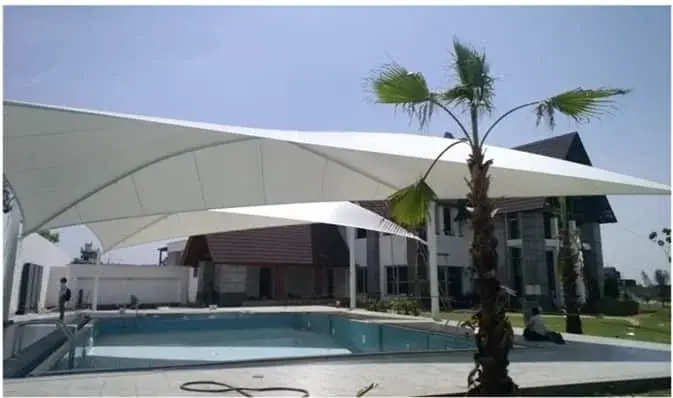
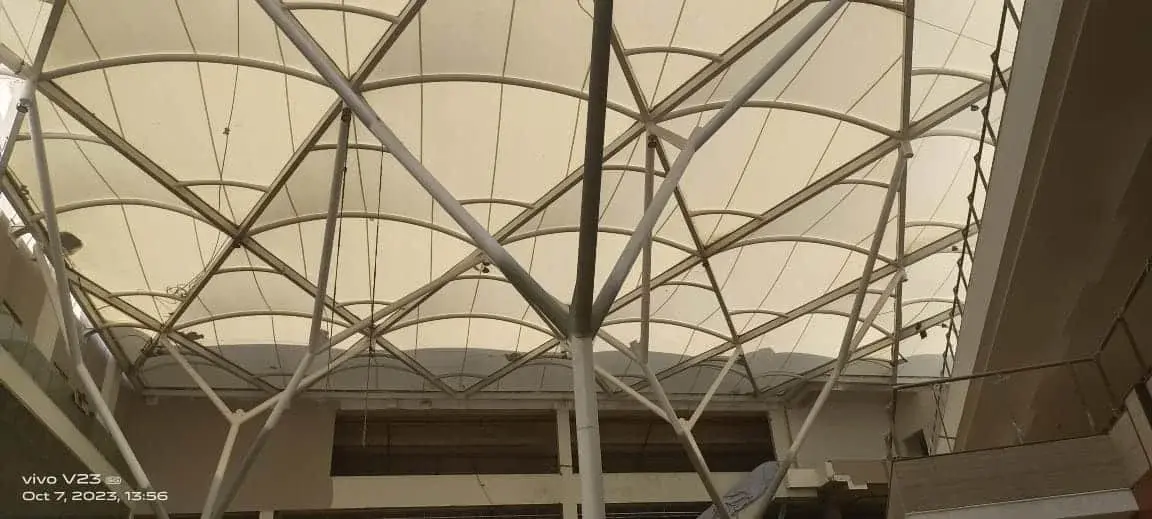
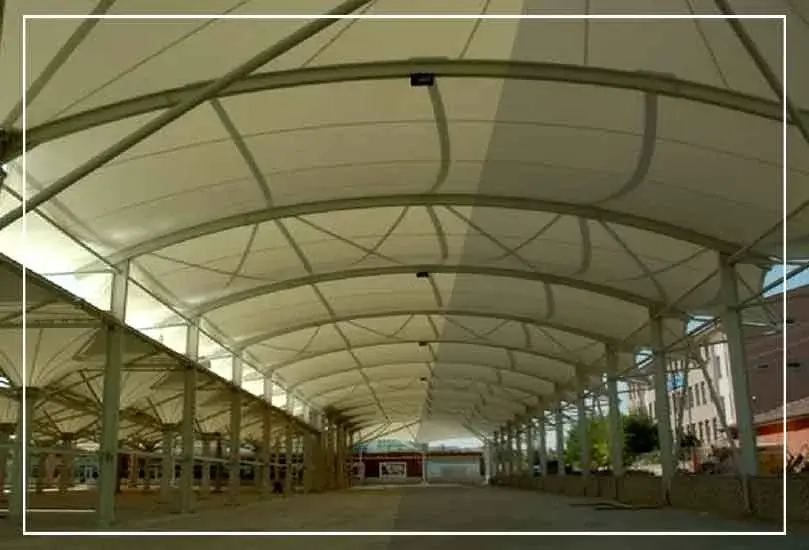
A tensile fabric structure is built from a membrane — a polymer or polymer-coated fibre textile — held in equilibrium by tension across a system of supports and anchorages. Moving the supports changes the surface geometry, which is how a flat roll of fabric becomes a doubly curved roof.
Each fabric brings its own properties. Long, sturdy fibres provide durability and elasticity. ETFE offers excellent UV resistance, high light transmission and a self-cleaning surface. PTFE-coated fibreglass is notably resilient against extreme weather and holds its tension over long spans. PVC-coated polyester remains the most economical high-strength option.
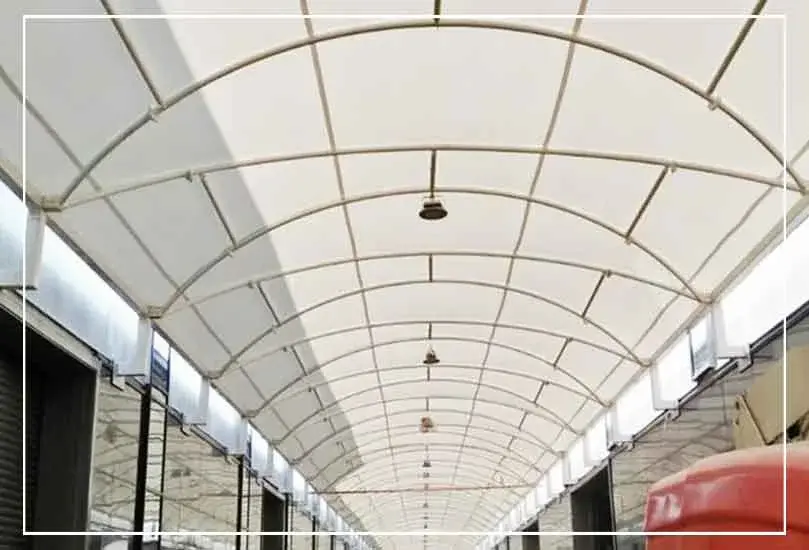
Why this structure type works.
-
Innovative Design
our Tensile Fabric Structures are crafted with innovative designs that not only serve functional purposes but also contribute to the aesthetic appeal of the space. The lightweight and flexible nature of the fabric allows for creative and unique architectural forms, enabling architects and designers to realize their vision with ease.
-
Natural Light Transmission
These structures allow for the transmission of natural light while providing shade and protection from harsh sunlight. This creates a comfortable and inviting environment for occupants, reducing the need for artificial lighting during the day and contributing to energy efficiency.
-
Weather Resistance
our Tensile Fabric Structures are engineered to withstand various weather conditions, including heavy rain, snow, wind, and UV radiation. The high-quality fabrics used in construction are durable, waterproof, and UV-resistant, ensuring long-term performance and durability.
-
Quick Installation
Compared to traditional construction methods, Tensile Fabric Structures can be installed relatively quickly. our experienced installation team ensures efficient and hassle-free installation, minimizing disruption to the surrounding environment and reducing overall project timelines.
-
Cost-Effectiveness
Tensile Fabric Structures offer cost-effective solutions for architectural projects. They require fewer materials and labor compared to traditional building methods, resulting in lower construction costs. Additionally, their lightweight design reduces the need for heavy support structures, further reducing construction expenses.
-
Sustainable Features
our prioritizes sustainability in their Tensile Fabric Structures by using eco-friendly materials and promoting energy efficiency. The lightweight nature of the fabric reduces the carbon footprint associated with transportation and installation, while the incorporation of natural light reduces reliance on artificial lighting, lowering energy consumption.
-
Customization Options
our offers a wide range of customization options for Tensile Fabric Structures, including choice of fabric type, color, shape, and size. This allows clients to tailor the structure to their specific requirements and design preferences, ensuring a personalized and unique solution for each project.
Specified against the brief, not from a default.
Service life, light transmission, fire performance and span decide which membrane this structure is built from.